
Sudoku Puzzle Challenge That Sharpens Logic and Daily Focus
Sudoku: A Timeless Number Puzzle for Every Age
Sudoku is one of the most popular logic-based puzzle games in the world. The game has attracted millions of players because of simple rules, engaging gameplay, and endless opportunities for mental exercise. Unlike many traditional games that rely on luck, Sudoku focuses entirely on reasoning, concentration, and problem-solving skills.
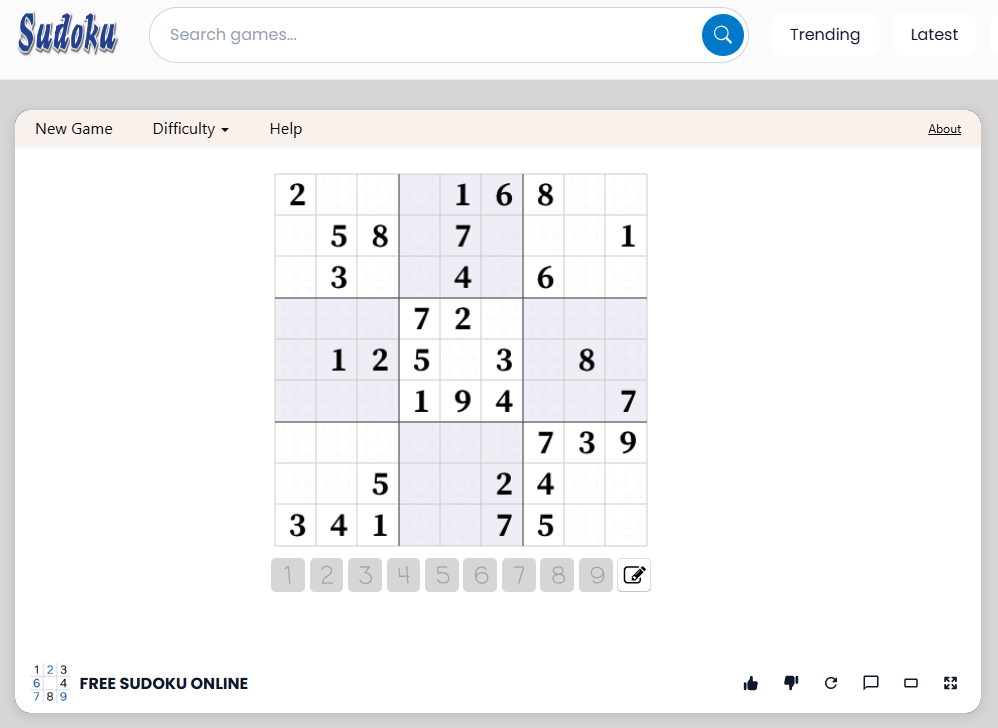
A standard Sudoku puzzle consists of a 9×9 grid divided into nine smaller 3×3 sections. The objective is to fill every empty cell with a number from 1 to 9. Each row, each column, and each 3×3 section must contain every number exactly once. Although the concept appears simple, completing a puzzle often requires careful analysis and strategic thinking.
Today, Sudoku is available in newspapers, books, websites, and mobile applications. The widespread accessibility has helped the game become a favorite pastime for people of all ages.
The History Behind Sudoku
Early Mathematical Puzzle Concepts
The foundation of Sudoku can be traced back to number-placement puzzles created by mathematicians in earlier centuries. These puzzles explored patterns and logical arrangements rather than arithmetic calculations.
During the twentieth century, puzzle creators developed new grid-based challenges that gradually evolved into the modern Sudoku format. The concept gained significant popularity after publication in puzzle magazines.
Global Recognition and Growth
The breakthrough moment for Sudoku came when the puzzle reached international audiences through newspapers and online platforms. Players quickly embraced the challenge because every puzzle could be solved using logic alone.
As internet access expanded, Sudoku became available to a much larger audience. Online versions introduced difficulty levels, timed challenges, and daily puzzles, helping the game maintain strong popularity around the world.
Understanding Sudoku Rules
Basic Grid Structure
A classic Sudoku puzzle contains 81 cells arranged in nine rows and nine columns. The grid is divided into nine smaller sections.
Some cells already contain numbers at the beginning of the puzzle. These numbers serve as clues that guide the solving process.
Main Objective
The goal is to place numbers from 1 to 9 into empty cells while following three important conditions.
Every row must contain numbers 1 through 9 without repetition.
Every column must contain numbers 1 through 9 without repetition.
Every 3×3 section must contain numbers 1 through 9 without repetition.
Following these rules ensures a valid and complete solution.
Effective Strategies for Solving Sudoku
Identifying Obvious Numbers
The simplest strategy involves examining rows, columns, and sections that already contain many numbers. Missing values can often be identified quickly by eliminating impossible options.
This method is especially useful for beginners who are learning puzzle-solving techniques.
Using Candidate Analysis
More difficult puzzles require deeper analysis. Players often write possible numbers for each empty cell. These possibilities, known as candidates, help narrow down choices.
By comparing candidates across rows, columns, and sections, players can discover patterns that reveal correct placements.
Recognizing Logical Patterns
Advanced Sudoku puzzles frequently rely on logical relationships between multiple cells. Recognizing these relationships allows players to make progress even when obvious moves are unavailable.
Developing pattern-recognition skills becomes easier with regular practice and experience.
Benefits of Playing Sudoku Regularly
Improved Concentration
Sudoku requires sustained attention and careful observation. Players must monitor multiple areas of the grid while evaluating possible solutions.
Regular practice can strengthen focus and improve the ability to concentrate on complex tasks.
Enhanced Problem-Solving Skills
Every Sudoku puzzle presents a unique challenge. Solving the puzzle involves analyzing information, testing possibilities, and making logical decisions.
These activities help develop critical thinking and structured problem-solving abilities.
Mental Stimulation and Cognitive Exercise
Many people enjoy Sudoku because it provides a stimulating mental workout. The puzzle encourages active thinking and keeps the mind engaged.
Although Sudoku is primarily a form of entertainment, many players appreciate the intellectual challenge that comes with each puzzle.
Stress Relief Through Focused Activity
Completing a Sudoku puzzle can create a sense of accomplishment and satisfaction. Concentrating on the puzzle often shifts attention away from daily concerns and distractions.
For many individuals, Sudoku serves as a relaxing activity that combines enjoyment with mental engagement.
Different Types of Sudoku Variations
Classic Sudoku
Classic Sudoku remains the most widely recognized version. The traditional 9×9 grid follows the standard rules and offers a range of difficulty levels.
This format provides an excellent starting point for new players.
Mini Sudoku
Mini Sudoku uses smaller grids, making puzzles faster to complete. These versions are ideal for short breaks or quick practice sessions.
Despite the reduced size, many mini puzzles still offer meaningful logical challenges.
Killer Sudoku
Killer Sudoku combines traditional Sudoku mechanics with additional numerical constraints. Groups of cells must add up to specific totals while still following standard placement rules.
This variation introduces extra layers of strategic thinking.
Samurai Sudoku
Samurai Sudoku consists of multiple overlapping grids connected together. Players must solve several interconnected puzzles simultaneously.
The format appeals to experienced players seeking a more demanding challenge.
Why Sudoku Remains Popular Today
The lasting appeal of Sudoku comes from a combination of simplicity and depth. Anyone can learn the basic rules within minutes, yet mastering advanced solving techniques may take years of practice.
Another reason for continued popularity is accessibility. Sudoku can be played with a pencil and paper, on a computer, or through a mobile device. Players can enjoy the game almost anywhere.
The puzzle also provides endless variety. Every completed grid represents a unique logical challenge, ensuring that no two experiences feel exactly the same.
Tips for New Sudoku Players
Beginners should start with easy puzzles and focus on understanding fundamental solving techniques. Rushing into difficult challenges can create unnecessary frustration.
Patience is important during the learning process. Careful observation often reveals opportunities that are easy to overlook.
Consistent practice helps improve speed, accuracy, and confidence. Over time, players naturally become better at identifying patterns and solving complex situations.
Conclusion
Sudoku continues to be one of the most engaging logic puzzles available today. The combination of straightforward rules, intellectual challenge, and universal accessibility has helped the game remain popular across generations.
Whether played for relaxation, entertainment, or mental exercise, Sudoku offers a rewarding experience that encourages concentration, reasoning, and strategic thinking. With countless puzzles available at every difficulty level, Sudoku provides endless opportunities for learning, improvement, and enjoyment.